Surgical Tooth Extraction

Surgical Tooth Extraction

Cerrahi Diş Çekimi

Surgical Tooth Extraction

If a tooth has decay or damage that is too extensive to be restored, extraction is recommended so that a prosthetic tooth can later be placed in its position. Surgical extraction is a technique used for teeth that are not easily visible in the mouth, fractured at the gum line, or impacted.

Situations That Require Tooth Extraction

  • If gum disease has caused loss of bone supporting the tooth, leading to mobility, and periodontal treatment cannot save the tooth,

  • If a tooth damaged by fracture or decay cannot be treated with root canal therapy, a crown, or a filling,

  • If primary (baby) teeth do not fall out on time,

  • If there is an impacted tooth—especially wisdom teeth—that causes decay or pain due to lack of space in the jaw,

  • If orthodontic treatment requires extra space to properly align the teeth, the dentist may recommend extraction.

How Is Surgical Tooth Extraction Performed?

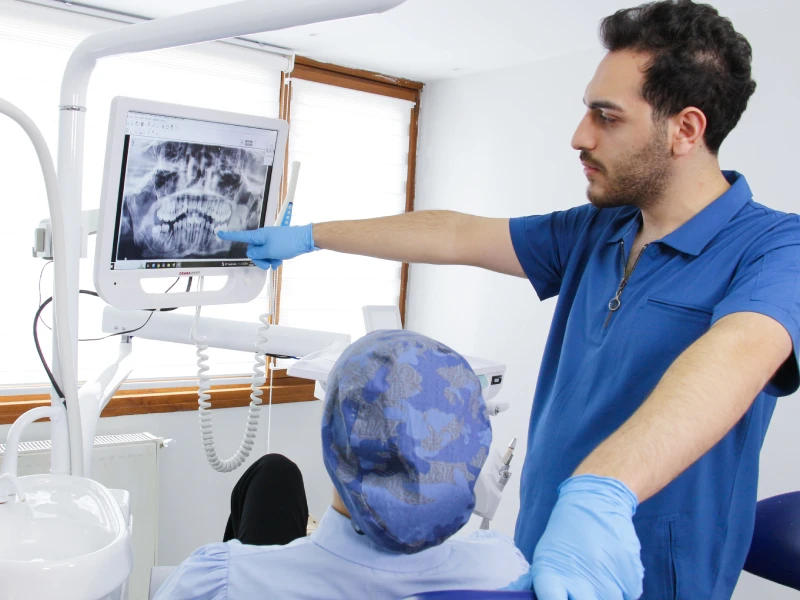
Although it is a common fear from childhood, extraction is actually a very simple procedure performed under local anesthesia. First, the dentist reviews the patient’s general and dental health history and examines the teeth. An X-ray is taken to determine the length, shape, and position of the tooth, surrounding bone, and soft tissues. This allows the dentist to establish a clear diagnosis.

During a simple extraction, the area is numbed with local anesthesia. The tooth is loosened using an instrument called an elevator and then removed with forceps. If necessary, the bone around the tooth may be reshaped.

Recommendations Before Tooth Extraction

  • Inform your dentist about any medications you take regularly for systemic health reasons. Unless otherwise advised, continue your regular medications before the extraction.

  • Come to your appointment on a full stomach.

  • Rinsing your mouth with an antiseptic mouthwash or brushing your teeth before the procedure can help reduce the risk of infection afterward.

  • Patients with diabetes may be asked to have their fasting blood sugar measured on the day of extraction.

Recommendations After Tooth Extraction

  • Do not rinse your mouth or spit frequently, as this may dislodge the blood clot and delay healing.

  • Bite firmly on the sterile gauze placed on the extraction site.

  • Do not touch the extraction area with your tongue, fingers, or any objects such as toothpicks.

  • Avoid sucking on the wound area.

  • Avoid smoking and alcohol.

  • For two days, avoid very hot or very cold foods and drinks. Softer, lukewarm foods are recommended.

  • Do not eat or drink until the local anesthesia fully wears off to avoid biting and injuring your cheek, lips, or tongue.

  • As the anesthesia wears off, significant pain may occur. Use only the painkillers recommended by your dentist. Do not use aspirin or similar medications.

  • Slight bleeding during the first 24 hours is normal. However, if bleeding increases, or if you experience severe pain or bad odor, contact your dentist immediately.

  • You may resume oral hygiene 24 hours after extraction. Brushing earlier may disrupt the healing wound.

  • Use any prescribed medications exactly as directed by your dentist.

Dentaöz - Ağız ve Diş Sağlığı Polikliniği
Hello, how can we help you?
14:35
As Dentaöz, we use cookies on our website. This Cookie Policy (“Policy”) applies to the website located at https://dentaoz.com/ managed by Dentaöz, and cookies will be used as described in this Policy.

I accept